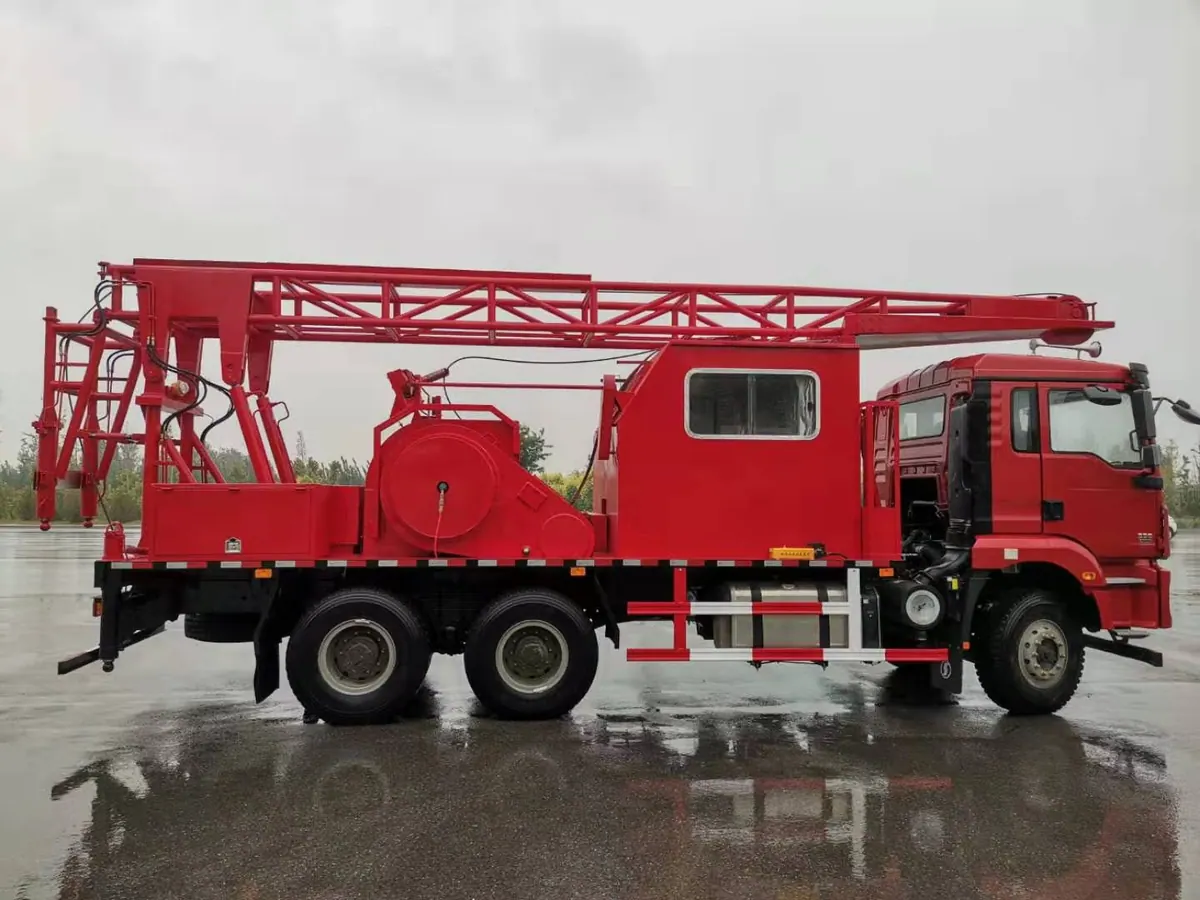
Provide a current location layout
Show access, the well arrangement, receiving equipment, utilities and the space available for the selected production-support task. Identify nearby equipment and restrictions relevant to the project review. A vehicle transport drawing is not the same as an operating layout. Ask the supplier to identify the additional dimensions and clearances needed to assess positioning, connections and service access at the actual location.
Identify supplied support and positioning equipment
Request the components and operating configurations actually included, such as any stabilizing or support arrangement required by the selected mechanism. Do not assume every truck uses the same setup or includes the same accessories. Ask for configuration-specific requirements and relevant loads from the responsible supplier. A photograph showing supports in one position does not establish an approved arrangement for another mechanism, site or intended service.
Coordinate ground and foundation assessment
Provide available ground, foundation and site information to the responsible project designers and identify what remains to be assessed. Request the supplied equipment loads and other inputs needed for that review. Do not replace the assessment with a universal statement that level ground or a gravel pad is sufficient. Suitability depends on the actual location, equipment arrangement and project requirements, with responsibilities assigned before installation work is accepted.
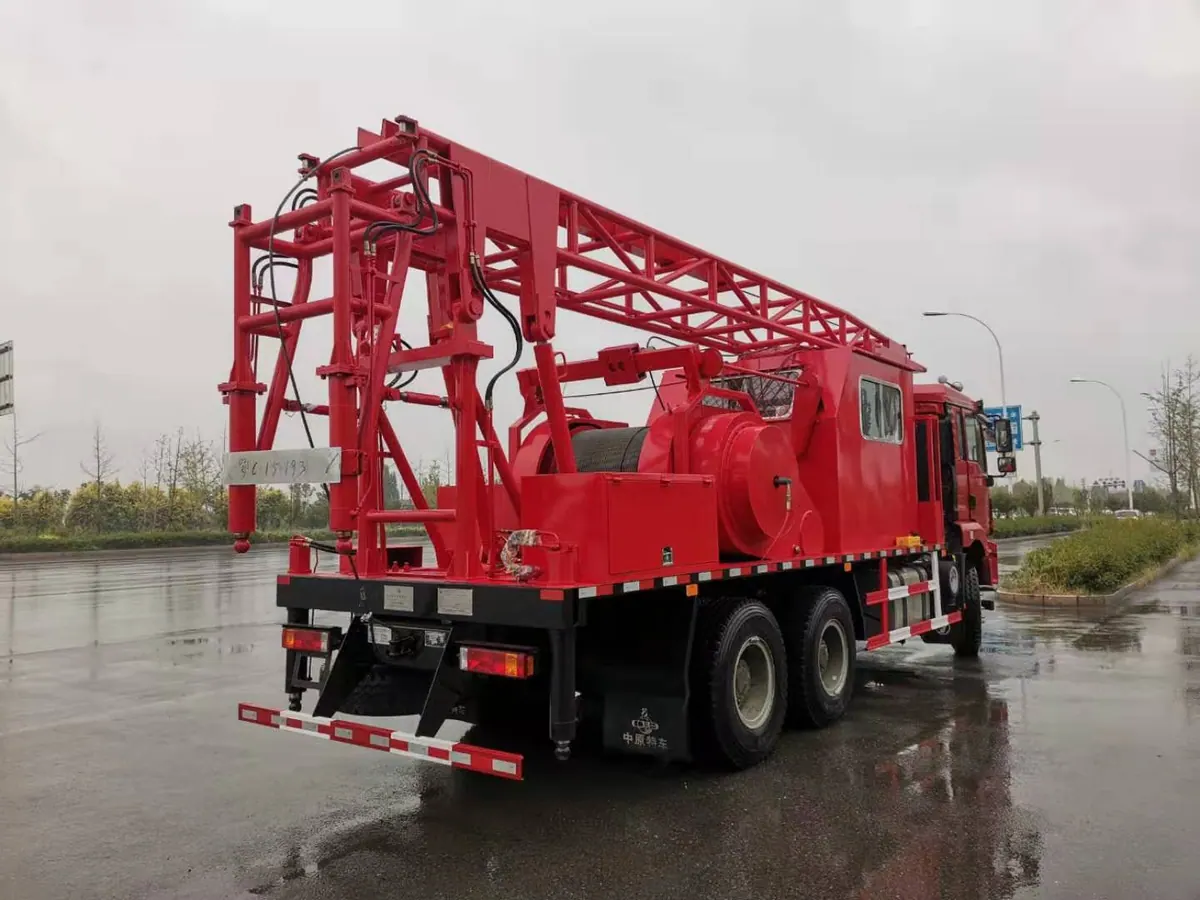
Include connected equipment and work access
Review hose or piping routes, mechanical interfaces, operator access, maintenance space and any handling provisions needed by the selected arrangement. Identify equipment that must move separately or be placed outside the truck footprint. A compact vehicle can still require substantial operating space. Keep these external areas and resources in the purchase comparison rather than discovering after delivery that the vehicle can park at the well but cannot support the accepted job layout.
Define site checks and change responsibility
Ask for the supplier setup requirements and identify who verifies the actual placement and supporting conditions under approved site procedures. Keep the operating arrangement, inspection records and deviations controlled. If the site layout or selected mechanism changes, obtain the required review rather than treating the earlier positioning approval as universal. Procurement documentation should specify evidence and ownership without becoming a generic field setup instruction or replacing the actual engineering assessment.
Separate vehicle mobility from site readiness
Ask bidders to state the site information and resources their proposed configuration requires. Compare complete operating footprints, support accessories, installation interfaces and any purchaser-managed ground or foundation work. Identify uncertainties early enough to affect layout approval and commercial selection. Keep the accepted location cases with the equipment records so future redeployment refers to verified requirements rather than an assumption that successful operation at one pad proves suitability at every other wellsite.
Put these items side by side in the bid review
| Purchase item | Question to resolve | Evidence to request |
|---|---|---|
| Space | Does the operating arrangement fit? | Controlled site and service layout |
| Support | What loads and site assessment are required? | Supplier inputs and engineering ownership |
| Readiness | Who verifies the installed position? | Approved site acceptance responsibilities |
Suggested wording for the quotation request
Please review the selected production-support truck against the attached location layout and available site information. Identify operating and maintenance clearances, supports and accessories, relevant load inputs and connection requirements. State ground or foundation assessment responsibilities, required purchaser resources and site verification. Distinguish transport dimensions from the complete operating footprint and identify any location or configuration changes requiring further review before redeployment.
Review the mobile truck as a defined production-support package, not as an automatically complete well-testing station. Identify the selected pumping method, drive interfaces, mechanical duty, fluid path and external receiving equipment. Separation, custody measurement, gas handling and other site services require their own reviewed scope when needed. Keep drawings, load cases, utilities and acceptance records tied to the ordered configuration. Installation and operation must follow supplier instructions and approved site procedures; a purchasing comparison does not replace the project engineering or authorize a different well duty.
For the wider equipment scope, consult the Mobile Oil Production Truck: Pre-Job Checklist. Use the RFQ checklist to collect the supporting documents before requesting a configuration-specific quotation.
Buyer questions
Is successful road access enough to accept the operating location?
No. Positioning, supports, ground suitability, connections and service clearances require their own review.
Can a generic gravel-pad statement replace site engineering?
No. Use the actual equipment requirements, relevant loads and responsible assessment of the intended location.
Background and supplier contact
OSHA oil and gas extraction guidance offers related background, not certification of the equipment in a quotation. Applicability must be checked for the project and destination.
Explore the mobile oil production support truck, browse all technical resources, or visit Vance Petroleum for company information. Request a production-support proposal with the well duty, drive requirements and external handling scope.